Reducing waste in container terminal operations: a data-driven approach to continuous improvement
Container terminals face increasing pressure to accommodate growing volumes while maintaining competitive service levels and controlling costs. Despite the apparent potential for operational efficiency gains, waste reduction through continuous improvement remains underutilised and poorly executed in practice. In this context, waste refers to operational activities, waiting times, movements, resources or interventions that do not add value to the terminal process, but do consume time, capacity, labour or equipment.
This paper argues that inefficiencies in terminal operations stem from fragmented processes, inconsistent information flows, limited analytical use of data, and the absence of systematic improvement frameworks. It proposes a structured, data-driven approach to continuous improvement, supported by simulation and modelling techniques. These tools enable terminals to evaluate operational changes in a risk-free environment and achieve rapid, measurable gains in performance and cost efficiency. The paper concludes that systematic process optimisation offers a high-return, low-risk pathway to improving terminal competitiveness.
1. Introduction: the overlooked opportunity of waste reduction
Container terminal operators traditionally prioritise throughput growth as the primary driver of commercial success. While increasing volume often leads to higher revenues, it does not inherently improve operational efficiency. On the contrary, growth-focused strategies frequently mask inefficiencies by compensating performance gaps with additional equipment and labour.
Waste reduction through continuous improvement represents an obvious opportunity to enhance profitability and performance. In container terminal operations, waste can take many forms: unnecessary equipment travel, waiting time for quay cranes, trucks, yard equipment or vessels, avoidable rehandling, unbalanced workloads, inefficient routing, manual interventions, and excess capacity used to compensate for variability.
However, in practice, this approach is rarely executed in a structured and sustained manner. Terminals tend to operate within established routines, where inefficiencies are tolerated rather than systematically addressed. As a result, significant optimisation potential remains unrealised.
2. Sources of inefficiency in terminal operations
Operational inefficiencies in container terminals are multi-faceted and often interrelated. Key sources include:
• Inconsistent and dynamic information flows: Frequent changes in vessel plans, yard positions, and truck arrivals create instability and reactive decision-making.
• Irregular operations: Peaks and troughs in workload lead to underutilisation of resources during off-peak periods and congestion during peaks.
• Limited or improper system usage: Terminal Operating Systems (TOS) are often underutilised, with manual overrides or workarounds reducing their effectiveness.
• Insufficient training and standardisation: Variability in operator skills and practices leads to inconsistent execution of processes.
• Suboptimal layouts and routing: Legacy layouts and incremental expansions result in inefficient traffic flows and excessive travel distances.
These inefficiencies rarely exist in isolation. Instead, they compound each other, leading to increased operational variability, higher costs, and reduced service reliability.
3. The data paradox: measuring without understanding
Modern container terminals generate vast amounts of operational data and track numerous Key Performance Indicators (KPIs), including quay crane productivity, truck turnaround times, and yard utilisation rates. However, the analytical use of this data remains limited.
In many cases, terminals focus on reporting performance rather than diagnosing it. The emphasis is placed on what is happening, while insufficient attention is given to why it is happening. Root-cause analysis is often absent or anecdotal, resulting in reactive decision-making and short-term fixes rather than structural improvements.
This “data paradox” undermines the value of digitalisation investments. Without a systematic approach to analysing performance drivers, the availability of data does not translate into actionable insights or sustained efficiency gains.
4. The absence of systematic process improvement
Systematic process improvement frameworks, such as continuous improvement cycles or structured optimisation programmes, are not widely embedded in terminal operations. Where improvement initiatives are undertaken, they are often:
• Reactive rather than proactive
• Isolated rather than integrated
• Short-term rather than continuous
This lack of structure represents a missed opportunity. Based on optimisation studies we have carried out over the last 20 years, systematic process improvement can deliver rapid and substantial benefits, including:
• Capacity increases of 10–25% without additional capital investment
• Equipment reductions of 10–25% while maintaining service levels
• Performance improvements of 5–20% without expanding resources
Importantly, these gains are achieved within short timeframes, often resulting in return on investment within one year. By improving the balance between service levels and cost efficiency, terminals can strengthen both their operational and commercial performance.
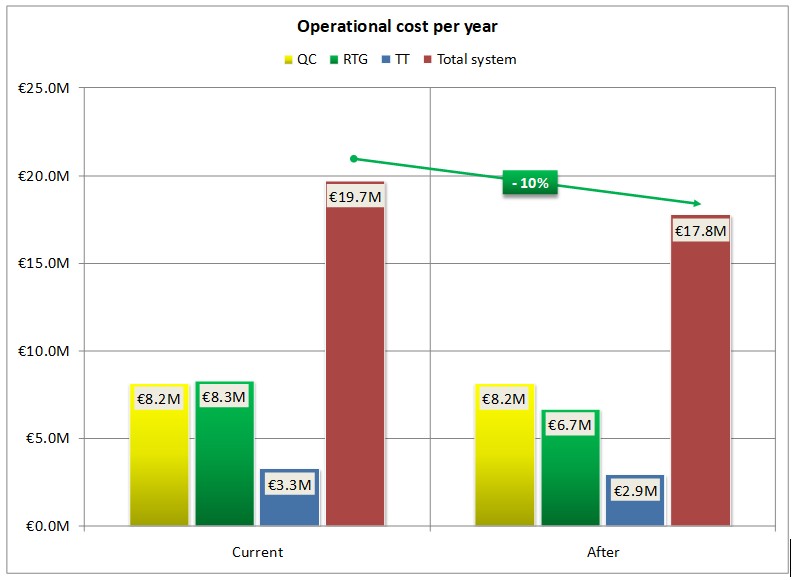
Figure 1: Quantified improvement measures
5. A data-driven approach: the role of simulation and modelling
Effective continuous improvement in container terminals requires a data-driven methodology. Advanced simulation and modelling techniques provide a powerful foundation for this approach.
Simulation models, these days sometimes referred to as digital twins, replicate real terminal operations using historical and real-time data. These models enable:
- Validation of improvement measures before implementation
- Quantification of performance and cost impacts
- Testing of multiple scenarios under varying operational conditions
- Risk-free experimentation without disrupting live operations
By providing a controlled and cost-effective “playground”, simulation allows decision-makers to assess whether proposed changes genuinely address underlying inefficiencies. This reduces implementation risk and ensures that resources are allocated to solutions with proven impact.
Moreover, simulation facilitates a shift from intuition-based to evidence-based decision-making, which is essential for sustaining continuous improvement over time.
6. Prioritisation of improvement measures
Besides a proper diagnosis, leading to the identification of solutions, or “improvement measures”, the prioritisation of these measures is often overlooked. This can lead to an unmanageable set of parallel projects, the results of which are difficult to measure. It also places a heavy burden on available resources.
Clear prioritisation of improvement measures is therefore required. For this purpose, Portwise has developed a matrix that enables us, together with terminal staff, to prioritise measures that deliver the strongest result in relation to the effort required for implementation. This effort may include investment, time, operational complexity and the level of organisational change required.
In this matrix, see Figure 2, we distinguish between four types of improvement measures:
• Quick wins: measures with high positive impact and relatively low implementation effort
• Strategic investments: measures with high positive impact, but also high implementation effort
• Selective improvements: measures with medium to low positive impact and relatively low implementation effort
• Low-priority measures: measures with low impact and high implementation effort, which should generally be avoided or reconsidered
Categorising solutions or improvement measures into these four categories allows for a structured improvement roadmap, where priorities are clearly defined. It also helps terminal management teams to focus resources on measures that are both realistic and measurable.
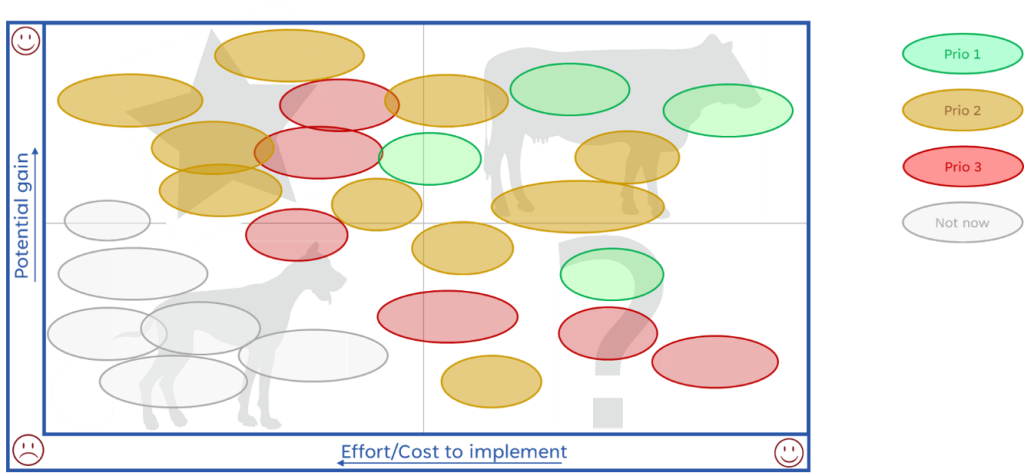
Figure 2: Portwise’s improvement matrix
7. Conclusion
The reduction of operational waste in container terminals represents a significant yet underutilised opportunity. While the principles of continuous improvement are well understood, their practical implementation is often fragmented and insufficiently structured.
Inefficiencies arising from inconsistent information, irregular operations, limited system utilisation, and insufficient training continue to hinder performance. At the same time, the analytical potential of operational data remains largely untapped, limiting the effectiveness of decision-making processes.
A systematic, data-driven approach to process improvement offers a clear pathway to overcoming these challenges. By leveraging advanced simulation and modelling techniques, terminals can evaluate and implement optimisation measures with confidence, achieving rapid and measurable gains in efficiency.
Ultimately, terminals that adopt structured continuous improvement methodologies will be better positioned to balance service levels with cost efficiency, respond to fluctuating demand, and maintain a sustainable competitive advantage in an increasingly complex logistics environment.
About Portwise and process improvement
Portwise helps container terminals improve operational performance by reducing waste, making better use of existing assets and strengthening the balance between service levels, capacity and cost.
Our process improvement approach combines data analysis, terminal expertise, simulation modelling and close collaboration with terminal teams. We start with a clear diagnosis of the operation, based on data and practical input from the people who run the terminal every day. Only then do we define, prioritise and test improvement measures.
Over the past two decades, Portwise has supported more than 50 terminals with structured improvement programmes. In many cases, these projects have delivered a return on investment within months. By using simulation and modelling where needed, we help terminals assess the impact of proposed changes before implementation and reduce the risk of disruption in live operations.
The result is a practical and evidence-based improvement roadmap that enables terminals to increase performance, control cost and create lasting operational improvement.