10 lessons for making container terminal automation work
Automation is becoming an established part of container terminal operations. But installing automated equipment or introducing new software does not automatically create a better-performing terminal.
The real challenge is making automation work as part of the complete operation.
Container terminals are complex systems in which quay, yard, horizontal transport, gate, equipment, software and people continuously interact. Change one part and the effects can be felt elsewhere. This becomes even more challenging in brownfield terminals, where new technology has to be introduced while existing operations continue.
As automation becomes more established, the industry challenge is therefore shifting from simply deciding what can be automated towards understanding how new equipment, systems and software can be introduced without disrupting existing operations. So what separates an automation project from an automation project that actually delivers operational value?
Here are ten lessons for terminals considering, implementing or expanding automation.
1. Start with the operational problem, not the technology
The first question should not be what can we automate? It should be what are we trying to improve? That might be quay productivity, equipment utilisation, yard congestion, truck turnaround time, safety, labour availability or operating cost.
Automation is one possible answer, but it is not automatically the right one. Better planning, process redesign, improved system utilisation or relatively small operational changes can sometimes deliver greater benefits. This is particularly important because poor processes can easily be hidden by adding more labour, equipment or capacity rather than addressing the underlying cause of the problem.
Start with the expected operational outcome. Then determine which combination of process improvement, optimisation, digitalisation and automation can deliver it.
2. Optimise before you automate
Automating an inefficient process does not remove the inefficiency. It can simply make that process run faster and more consistently. Before investing in automation, terminals should understand where operational waste occurs.
Common causes include inconsistent information flows, fluctuating workloads, manual workarounds, insufficient standardisation, underutilised systems, inefficient layouts and unnecessary travel distances. These issues often reinforce each other and create greater operational variability and higher cost. This is where continuous improvement becomes important.
Analyse the current operation. Understand where performance is being lost. Identify the root causes. Determine which changes can deliver measurable improvements. Only then should technology enter the equation.
This can also reveal opportunities that require far less investment than originally expected. Portwise optimisation studies have shown that structured improvement programmes can create substantial improvements in capacity, equipment requirements and performance without automatically adding more resources.
3. Look at the terminal as one system
A terminal can contain highly sophisticated individual technologies and still perform below its potential.
An automated vehicle may optimise its own movement. A quay crane may perform well. The TOS may produce an efficient plan. The gate may process trucks quickly. But the terminal does not operate as a collection of isolated components.
Quay productivity influences horizontal transport. Horizontal transport affects yard operations. Yard strategy influences truck service. Equipment availability changes planning priorities. This means automation should be approached at system level.
Individual equipment, software, planning logic and operational processes need to work together. Optimising one part of the operation while creating congestion somewhere else does not improve overall terminal performance. The goal should therefore be orchestration rather than isolated automation.
4. Build the data foundation first
Modern terminals generate enormous quantities of operational data. The challenge is rarely simply obtaining more data. The challenge is understanding it.
There is an important difference between knowing what happened and understanding why it happened. Terminals can monitor quay crane productivity, truck turnaround time, yard utilisation and equipment performance without necessarily identifying the underlying cause of poor performance.
In many cases, operational data is still primarily used for reporting instead of diagnosis. Without root-cause analysis, terminals risk responding to symptoms with short-term solutions instead of addressing structural problems.
Automation, optimisation and AI become much more valuable when systems have reliable and contextual operational data on which to base decisions. Good automation therefore starts with good information.
5. Integrate before you add more technology
Automation creates interfaces. Equipment must communicate with equipment control systems. Those systems need to interact with the TOS. Planning applications, safety systems, sensors, networks and operational workflows all need to exchange information.
Without integration, terminals risk creating islands of automation.
Sophisticated technology at the gate, in the yard and on the quay creates limited value if each system operates independently. Information needs to move between systems and reach the people and processes that use it. That is why integration architecture should be considered early.
Terminals need to understand how information moves through the operation, which systems exchange information and where responsibility for operational decisions sits. More technology does not automatically create a smarter terminal. Better connected technology does.
6. Use simulation and emulation before changing the live operation
One of the difficulties with container terminals is that operational changes are difficult to test in reality. Stopping part of a terminal to experiment with a new layout, fleet size, operating strategy, software configuration or automation concept is rarely practical. This is where simulation and emulation serve complementary purposes.
Simulation allows terminals to explore future scenarios, compare operating concepts and quantify the expected impact of changes before implementation. Models can be used to validate improvement measures, quantify performance and cost effects, compare scenarios under different operational conditions and experiment without disrupting the live operation. Emulation brings the testing environment even closer to the real terminal.
Detailed terminal models can be connected to actual terminal software such as the Terminal Operating System, Equipment Control System and Fleet Management System. This allows software, interfaces, process logic, control rules and operational behaviour to be tested within a controlled digital environment before they affect live operations. For automation projects, this can be especially valuable during implementation and commissioning.
Emulation can help determine how different systems behave when connected, identify integration issues, validate software versions and interfaces and test how the operation responds to exceptions, delays, unavailable equipment or changed planning decisions. It can also be used to evaluate whether the planned operation can achieve the required performance and service levels under realistic conditions.
The question therefore becomes not simply does this technology work? It becomes does the complete terminal operation work when all these systems are connected?
7. Treat brownfield automation differently
Very few existing terminals have the luxury of starting again. Brownfield terminals already have infrastructure, equipment, software, operating procedures and established ways of working. Meanwhile, vessels still need to be handled and containers still need to flow while modernisation takes place. That makes the transition itself a fundamental part of the automation strategy.
New automated equipment may need to operate alongside manual equipment. New software may need to integrate with legacy systems. Existing processes may have to remain operational until replacement systems have been fully tested and accepted. Rather than attempting to transform everything simultaneously, terminals can introduce automation in controlled steps, validate each stage and progressively integrate new capabilities into the existing operation.
A well-designed transition strategy can be just as important as the final automation concept.
8. Design for exceptions, not only normal operations
Automation often performs extremely well when everything happens according to plan. Terminal operations rarely do. A vessel arrives late. Equipment becomes unavailable. Yard conditions change. Weather interrupts operations. A planning decision changes. A container appears somewhere unexpected. A plan that made perfect sense an hour earlier may suddenly no longer be optimal.
The real test of automation is therefore not only how the operation performs under normal conditions. It is how effectively the system responds when reality deviates from the plan. Systems need to recognise deviations early, understand their wider operational impact and support replanning. Emulation can play an important role here as well. Real terminal software can be exposed to realistic operational exceptions before go-live, helping teams understand how connected systems respond and where procedures or control logic may need further improvement.
At the same time, operators need sufficient information and authority to intervene when human judgement is required. The objective should not necessarily be to remove people from every decision. It should be to automate the predictable and manage the exceptions effectively.
9. Bring people into the automation strategy
Automation changes more than equipment. It changes roles, responsibilities, skills and decision-making. Operators may move from driving equipment to supervising automated systems. Planners may spend less time constructing plans manually and more time evaluating exceptions. Maintenance teams require different technical capabilities. Operational control becomes increasingly data-driven. People therefore need to be part of the automation programme from the beginning.
Training should not only explain how a new system works. Teams need to understand how their role fits into the new operating model, how responsibilities change and what they should do when systems or processes do not behave as expected. This is particularly important because human experience often becomes most valuable precisely when operations deviate from the plan.
Technology should support operational expertise rather than simply attempt to replace it.
10. Make automation a continuous improvement process
Go-live should not be considered the end of an automation project. It is the beginning of another optimisation cycle.
Once automated systems are operational, terminals generate new information about equipment behaviour, productivity, bottlenecks, software logic and operational interactions. That information should continuously feed back into planning and improvement.
- Measure performance.
- Diagnose the causes of deviations.
- Identify improvement measures.
- Test them.
- Prioritise them.
- Implement them.
- Then measure again.
Simulation and emulation can continue to support this process long after initial implementation. Emulation environments can be retained for testing new software releases, changes to control logic, operational procedures, training and future optimisation. At Portwise we see emulation as an environment that can support testing, training and operational improvement before and after go-live. Automation should therefore not be approached as a one-off technology programme. It should become part of a continuous cycle of operational improvement.
Automation that works starts with the operation.
The direction of travel in container terminals is clear. Automation, digitalisation, advanced optimisation and increasingly AI will play a growing role in how terminals operate. But the fundamental question remains operational.
Does it make the terminal work better?
The most effective automation strategies start with a clear understanding of the existing operation. They identify where value is being lost, analyse the interaction between processes, equipment and systems and test proposed changes before introducing them into the live terminal. That requires more than automation technology alone. It requires terminal expertise, data, simulation, emulation, system integration, implementation and continuous improvement.
Because ultimately, the objective is not to create the most automated terminal. It is to create a terminal that performs.
Not sure where to start?
An automation or terminal improvement project can quickly become complex. What should the scope be? What performance improvement can realistically be achieved? What budget is required? What is a realistic timeline? Which systems need to be integrated? And how can you reduce the risks before making major investment decisions?
You do not need to have all those answers before starting. Sometimes the most sensible first step is simply to discuss the challenge.
Start with a free 30-minute consultation
Talk to one of our Portwise terminal experts about your upcoming project. We can help you clarify the challenge, define the expected outcome and identify the most sensible next step.
Portwise has helped leading companies in more than 80 countries improve their terminal operations, with a focus on creating smarter, more efficient and more sustainable ports and terminals.
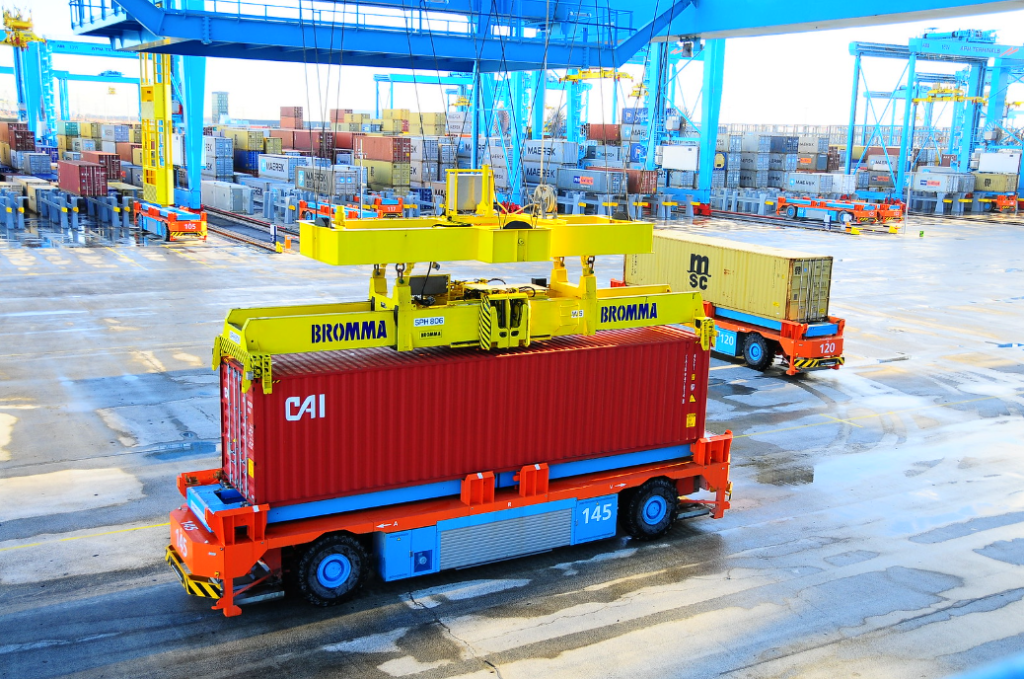 Picture by APM Terminals